Basements come with one major design challenge: light, or the lack of it. Even finished spaces often rely on artificial lighting, small windows, or indirect daylight, which makes paint color selection far more critical than in above-ground rooms. Choosing the wrong basement paint colors can leave the space feeling heavy, dull, or unfinished, no matter how much effort goes into furnishings or layout.
The right basement paint colors, with the help of a professional interior painter, can visually expand the room, soften shadows, and make artificial lighting work harder. When selected with intention, color becomes a tool, not just a decorative choice.
Why Light Conditions Matter When Choosing Basement Paint Colors
Natural light affects how paint colors read on walls. In basements, light sources are often cooler, more directional, and less consistent throughout the day. This means basement paint colors need to be chosen for performance, not just appearance on a sample card.
Dark tones can absorb what little light exists, while overly bright whites can feel stark or reflective in an uncomfortable way. Well-chosen basement paint colors balance brightness with warmth, allowing the space to feel grounded rather than washed out or cave-like.
How Artificial Lighting Changes Color Perception
LED and recessed lighting tend to cast cooler tones, which can exaggerate undertones in paint. This is why basement paint colors with subtle warmth often perform better than stark neutrals. Understanding how lighting interacts with color helps prevent finishes from looking flat or overly gray once applied.
Neutral Basement Paint Colors That Don’t Feel Cold
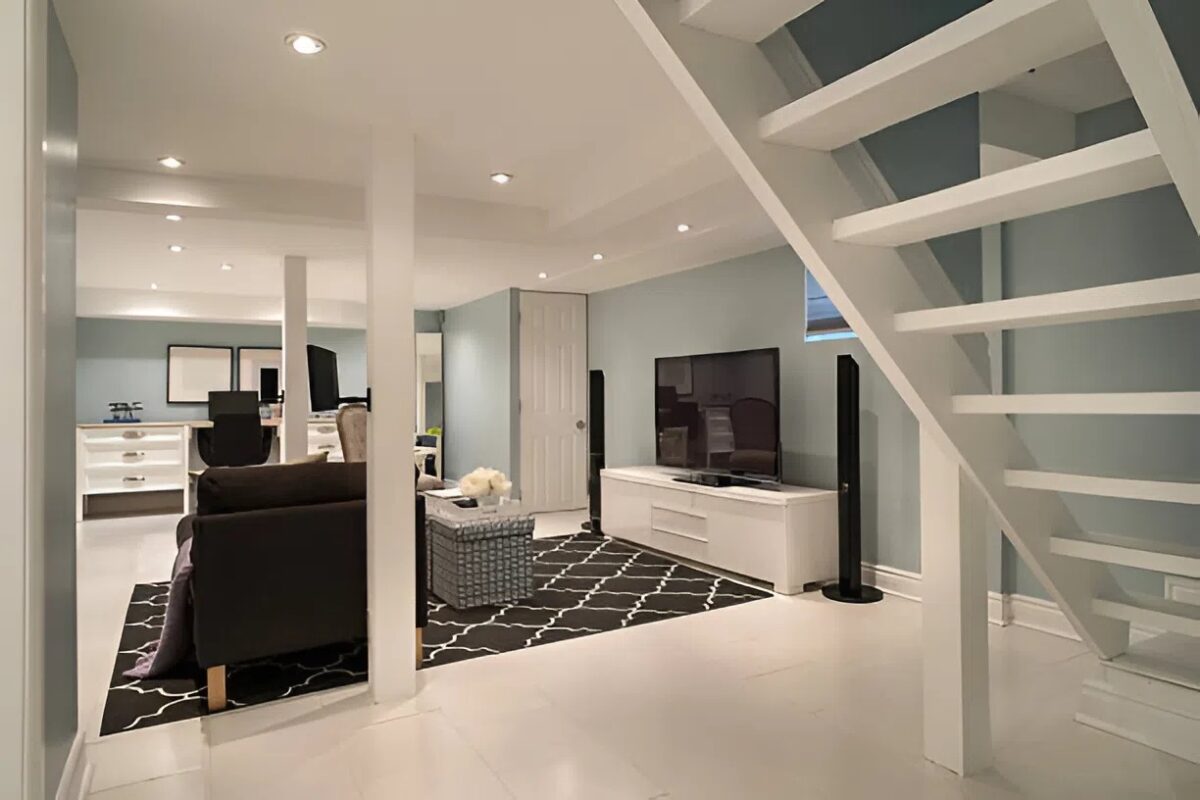
Neutral tones are a common choice for basements, but not all neutrals are equal. Cool grays and icy whites often look clean upstairs but can feel uninviting below ground. The most effective basement paint colors sit in the middle; warm enough to offset shadows, but neutral enough to stay flexible.
Greige, soft taupe, and warm off-white shades are popular basement paint colors because they reflect light without turning sterile. These tones help unify walls and ceilings, making lower ceilings feel slightly higher and rooms feel more cohesive.
Avoiding Flat or Muddy Finishes
In basements, paint finish matters almost as much as color. Eggshell or satin finishes are often better basement paint color choices than flat paint, as they gently reflect light and are easier to clean in high-use areas like family rooms or home gyms.
Using Light Colors to Expand Small Basement Spaces
Smaller basements or segmented layouts benefit from lighter basement paint colors that visually open the space. Soft creams, pale beiges, and light greiges help reduce contrast between walls and trim, creating a smoother visual flow.
Rather than using stark white everywhere, layering light basement paint colors with subtle tonal differences keeps the space from feeling one-dimensional. This approach works especially well in basements with multiple functions, such as living areas combined with storage or offices.
Ceiling and Trim Considerations
Ceilings painted slightly lighter than the walls can help bounce light downward. Coordinating ceiling and wall basement paint colors avoids harsh breaks that draw attention to lower ceiling heights.
Dark Basement Paint Colors When Used Intentionally
While lighter tones dominate most recommendations, dark basement paint colors can work when used strategically. Accent walls, media rooms, or bar areas often benefit from deeper shades that create contrast and mood.
Charcoal, deep olive, or muted navy basement paint colors can add sophistication when paired with proper lighting and lighter surrounding finishes. The key is balance; dark colors should enhance function, not overpower the room.
Where Dark Colors Perform Best
Spaces designed for entertainment or low-glare activities often suit darker basement paint colors. These tones reduce visual noise and can make controlled lighting feel intentional rather than compensatory.
Moisture and Durability Considerations for Basement Paint Colors
Basements are more prone to humidity fluctuations, which makes durability a critical factor. High-quality paints designed for moisture resistance help basement paint colors maintain their appearance over time.
Using the right primer and selecting paints with mildew resistance ensures basement paint colors don’t discolor, peel, or stain prematurely. This is especially important in laundry areas, utility rooms, and partially finished spaces.
Long-Term Maintenance Matters
Basement paint colors should be easy to maintain. Scuff-resistant finishes and washable surfaces make it easier to keep walls looking fresh, especially in high-traffic basement areas.
Choosing Basement Paint Colors That Match How the Space Is Used
A basement designed as a guest suite requires different basement paint colors than those used for storage or recreation. Matching color choices to function helps the space feel purposeful rather than improvised.
Warm neutrals work well for multipurpose rooms, while cooler or darker basement paint colors may suit dedicated entertainment zones. When the color supports how the room is used, the entire space feels more cohesive.
Ready to Refresh Your Basement? Choose Heartland Painting
A well-painted basement starts with the right preparation, products, and color strategy. Heartland Painting helps homeowners select basement paint colors that suit lighting conditions, usage, and long-term durability, so the space feels finished, not forced. From surface prep to final walkthrough, every detail is handled with care to deliver results that last.
Contact us today to schedule a consultation and take the first step toward a basement that works as well as it looks.